Faucet Repair in San Antonio, TX
We repair dripping, leaking, loose, and low-flow faucets across San Antonio.
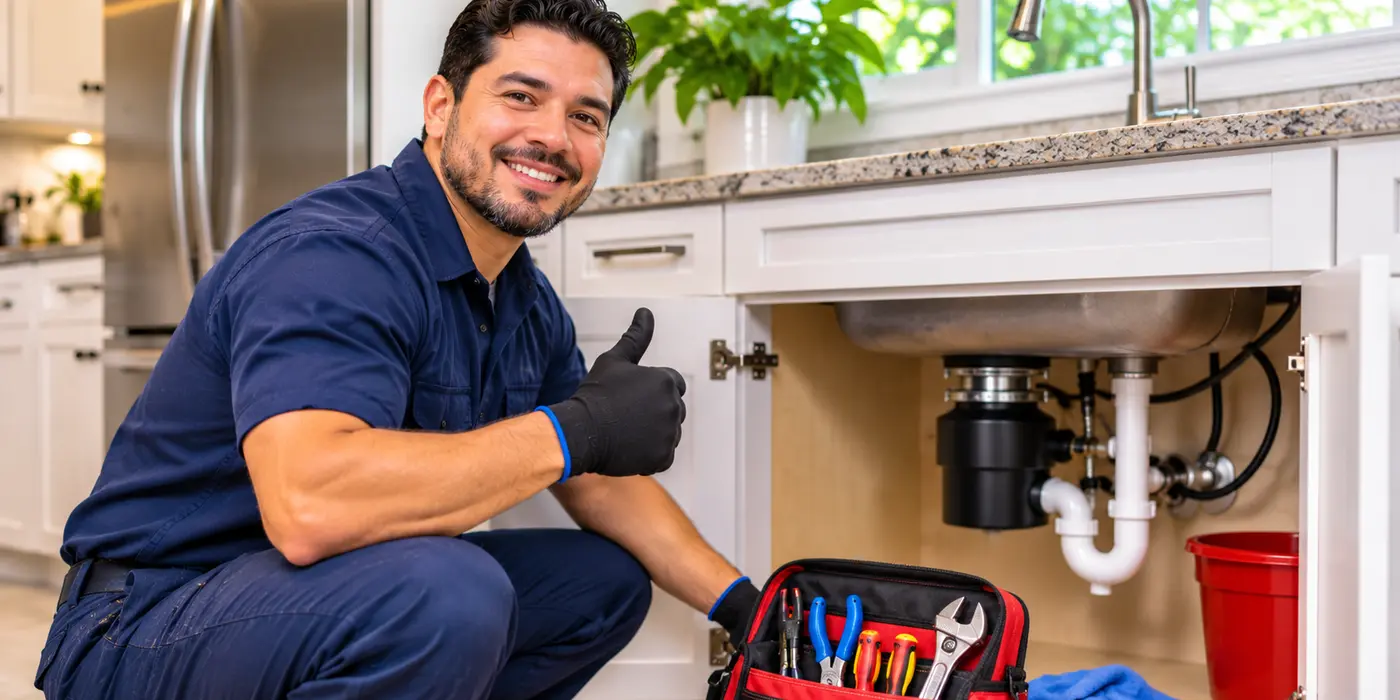
Customers call us when the faucet “won’t stop dripping,” the handle is loose, water comes out around the base, or the kitchen sink has barely any flow. We translate those descriptions into the parts involved, such as a cartridge, stem, aerator, valve seat, supply tube, or mounting nut.
A faucet that drips into a basin may be able to wait briefly, but water escaping below the counter, from the base, or after the handle is turned off should not wait. That water can soak a cabinet floor, swell particleboard, stain the wall behind the sink, and keep the fixture running when it should be shut off.
Dripping faucet and weak flow
A steady drip from the spout usually points to a worn cartridge, stem seal, washer, or valve seat, while a spray pattern or weak stream can come from a clogged aerator or debris inside the faucet. Water pooling around the faucet base often means a failed O-ring or seal beneath the spout, and a handle that turns without controlling temperature can indicate a stripped handle adapter or damaged cartridge.
Another common report is that only the hot or cold side has stopped flowing, even though the other side works. These faults can sound alike over the phone, but the part, access beneath the sink, and amount of disassembly are different, so each repair has its own cost once we inspect the fixture.
Faucet inspection and repair
Our faucet inspection starts with the handle, spout, aerator, mounting hardware, supply connections, and shutoff valves under the sink. We run both sides of the fixture, check the spray and temperature change, look for water at the base and cabinet, and confirm whether the faucet can be isolated without disturbing the rest of the sink plumbing.
A basic inspection commonly takes about 20 to 40 minutes, and replacing an accessible aerator, cartridge, O-ring, supply tube, or handle part is often completed during the same visit. A faucet with a discontinued cartridge, specialty finish, corroded mounting nut, or concealed wall valve may require a part order or a return visit after the correct component is identified.
Cartridge, shutoff valve, and access
The cartridge, the condition of the shutoff valve, and the space under the sink are the main factors that move the repair scope. An older faucet may use a cartridge that is no longer stocked, while a current model may have a removable cartridge available through the manufacturer or a local supplier.
Access changes the work when a garbage disposal, pullout drawer, pedestal sink, or tight vanity leaves little room for tools around the mounting nut and supply lines. A shutoff valve that has seized or will not fully close can add work because the faucet cannot be safely separated from its water supply until that valve issue is addressed.
Faucet model and cabinet access
Have the faucet model number ready if you can find it, because it helps us identify the correct cartridge, handle adapter, aerator, or spray-head connection. The number may be printed on the installation sheet, beneath the spout, on the faucet body near the base, or on a label inside the vanity cabinet.
Tell us which room and fixture need work, such as the kitchen sink, bathroom vanity, laundry sink, bar sink, or tub faucet. Let us know whether water is running now, whether it leaks only while the handle is on, and whether stored items, drawers, or a disposal limit cabinet access. If you know the approximate age or brand on the faucet plate, include that as well. Call Plumbing Solutions San Antonio at (726) 227-4061 before a drip or base leak damages the cabinet material beneath the fixture.
Next: slab leak repair, or back to the home page.